Tidewater Step Hull
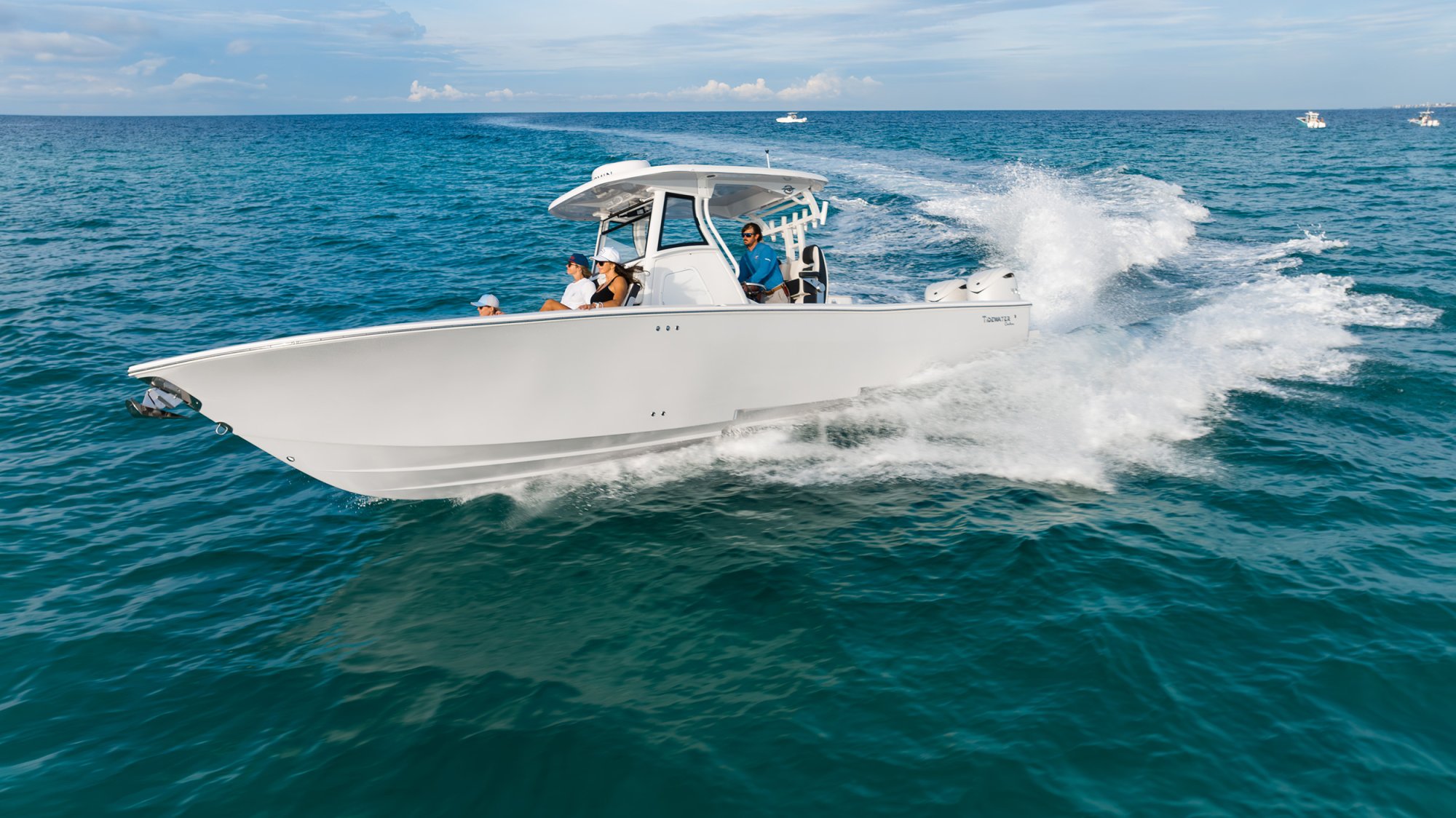
Step Hulls Explained: How They Work and Why Tidewater Boats Dominate the Mid-Tier Market
Tidewater boats have earned a reputation for delivering high-end performance without luxury-brand pricing, and a major reason is their advanced step hull design.
Among production builders, Tidewater Boats stands out for one reason: they deliver real stepped-hull performance across both bay and offshore platforms—without pushing buyers into luxury-brand pricing.
This article breaks down how step hulls actually work, why they matter, and why Tidewater boats have become the performance-per-dollar benchmark in the mid-tier saltwater market.
What Is a Step Hull (and What It Is NOT)
A step hull uses a deliberate, notched break in the running surface of the hull—typically transverse (side-to-side)—designed to introduce controlled air under the boat while underway.
This is not:
-
A cosmetic line molded into the fiberglass
-
A shallow pad added for marketing purposes
-
A gimmick designed only to boost top speed numbers
A true step hull:
-
Pulls aerated water under the hull
-
Reduces wetted surface area
-
Lowers hydrodynamic drag
-
Increases dynamic lift
When executed correctly, step hulls make a boat faster, flatter, and more efficient—especially in real-world offshore and open-bay conditions.
When executed poorly, they can create instability. That’s why many builders avoid them entirely or reserve them only for high-end, high-dollar performance brands.
The Hydrodynamics Behind Step Hulls
At cruising and running speeds, a conventional hull pushes water aside and drags a large wetted surface through the water. That drag costs speed, fuel, and throttle.
A stepped hull works differently.
As water breaks cleanly across the step:
-
Air is drawn beneath the aft running surface
-
Friction between hull and water is reduced
-
Lift increases without increasing throttle
-
The hull rides higher and flatter
The result is measurable performance improvement, not theory.
Properly engineered step hulls deliver:
-
Faster hole shot and acceleration
-
Higher cruise speeds at lower RPM
-
Flatter running attitude
-
Reduced fuel burn offshore
-
Better load-carrying ability
-
A smoother, more confident feel in chop
This is not marketing copy. This is physics—and experienced captains feel it immediately when they push the throttles forward.
Why Step Hulls Are Rare in the Mid-Tier Market
Designing a step hull correctly is expensive and unforgiving.
To work properly, a step hull must account for:
-
Hull deadrise and entry angle
-
Weight distribution fore and aft
-
Fuel tank placement
-
Engine height and setback
-
Running surface geometry
If any of those variables are wrong, a stepped hull can:
-
Porpoise
-
Lose bite in turns
-
Become unpredictable in quartering seas
That risk is why most mid-tier builders stick to:
-
Pads
-
Modified V bottoms
-
Cosmetic “step-looking” lines that do nothing
Tidewater took the harder path—engineering real step hulls that remain stable, predictable, and safe across a wide range of conditions.
Tidewater Boats With TRUE Stepped Hulls (Verified Models)
This is one of the only builders offering true aerodynamic steps across both bay boats and offshore center consoles—at a price point normally reserved for non-stepped hulls.
Below are verified Tidewater models with genuine, functional step hulls—not pads, not styling lines.
Tidewater 2500 Carolina Bay — TRUE Step Hull
A true stepped hull in a bay boat is extremely rare. The 2500 Carolina Bay integrates a functional step into a shallow-draft platform without sacrificing stability.
Benefits on the water:
-
Faster lift onto plane
-
Improved efficiency during long bay runs
-
Better ride when crossing open water and light offshore conditions
For anglers who fish large bays, nearshore waters, and want efficiency without jumping to an offshore hull, this design stands alone in its class.
Tidewater 2700 Carolina Bay — TRUE Step Hull
The 2700 Carolina Bay scales the concept upward. Many large bay boats rely on pads to chase speed numbers—Tidewater uses a true step instead.
What that means in real use:
-
Flatter running angle at cruise
-
Less bow rise under load
-
Better control in wind-chopped bays
-
More efficiency on longer runs
Compared to similarly sized bay boats, the difference is noticeable immediately.
Tidewater 3100 Carolina Bay — TRUE Step Hull
The 3100 Carolina Bay is one of the largest stepped-hull bay boats on the market—period.
This hull bridges the gap between bay and offshore platforms:
-
Massive deck space
-
Offshore-capable ride quality
-
Efficiency that defies its size
The stepped bottom allows the boat to carry weight without requiring excessive throttle, making it ideal for anglers who need space, range, and speed without moving into a full offshore center console.
Tidewater 302 CC Adventure — TRUE Step Hull
The 302 CC Adventure is where Tidewater’s offshore stepped-hull engineering shines.
This hull was designed to:
-
Run level at cruise
-
Carry fuel, crew, and gear efficiently
-
Maintain control in real offshore conditions
The step provides lift without instability, allowing the boat to perform efficiently across a wide RPM band—ideal for long offshore runs where fuel burn matters.
Why Tidewater Boats Use True Step Hulls
The flagship 380 CC Adventure uses a multi-step hull—a design typically reserved for ultra-premium offshore brands.
At this size, hull efficiency becomes critical. Tidewater’s multi-step design:
-
Reduces drag dramatically
-
Improves range
-
Delivers performance numbers normally associated with boats costing six figures more
For a hull this large, the step design is not a gimmick—it is a requirement for efficiency and control.
Why Tidewater Boats Win: High-End Performance Without Luxury Pricing
Here’s the reality buyers discover when they start comparing numbers.
Tidewater’s stepped-hull boats routinely deliver performance comparable to brands priced $50,000 to $150,000 higher.
Yet Tidewater remains firmly in the mid-tier market while offering:
-
Advanced stepped-hull engineering
-
Carolina-flare ride quality
-
High-grade fiberglass construction
-
Premium hardware and fit-and-finish
-
Real offshore and big-bay efficiency
You’re not paying for a badge or a yacht-brand markup. You’re paying for hull design, engineering, and usable performance.
Step Hull Myths (and Why Tidewater Gets It Right)
Myth: Step hulls are dangerous
Reality: Poorly designed step hulls are dangerous. Properly engineered ones are stable and predictable.
Myth: Step hulls are only about top speed
Reality: Efficiency, ride quality, and mid-range performance matter far more.
Myth: Only luxury brands can build good step hulls
Reality: Tidewater proves otherwise—by engineering first and pricing responsibly.
See Tidewater’s Stepped-Hull Lineup at Texas Sportfishing & Yacht Sales
Texas Sportfishing Yacht Sales carries the full lineup of Tidewater’s stepped-hull models, including:
-
2500 Carolina Bay
-
2700 Carolina Bay
-
3100 Carolina Bay
-
302 CC Adventure
-
380 CC Adventure
If you want the strongest performance-per-dollar hulls in the saltwater market, these are the boats to run.
Whether you fish big bays, run offshore, or want one platform that does both, Tidewater’s stepped hull designs deliver real-world advantages you can feel from the helm—not just read on a spec sheet.