Offshore Boats for Sale: What Truly Matters When Buying a Serious Offshore Fishing Boat
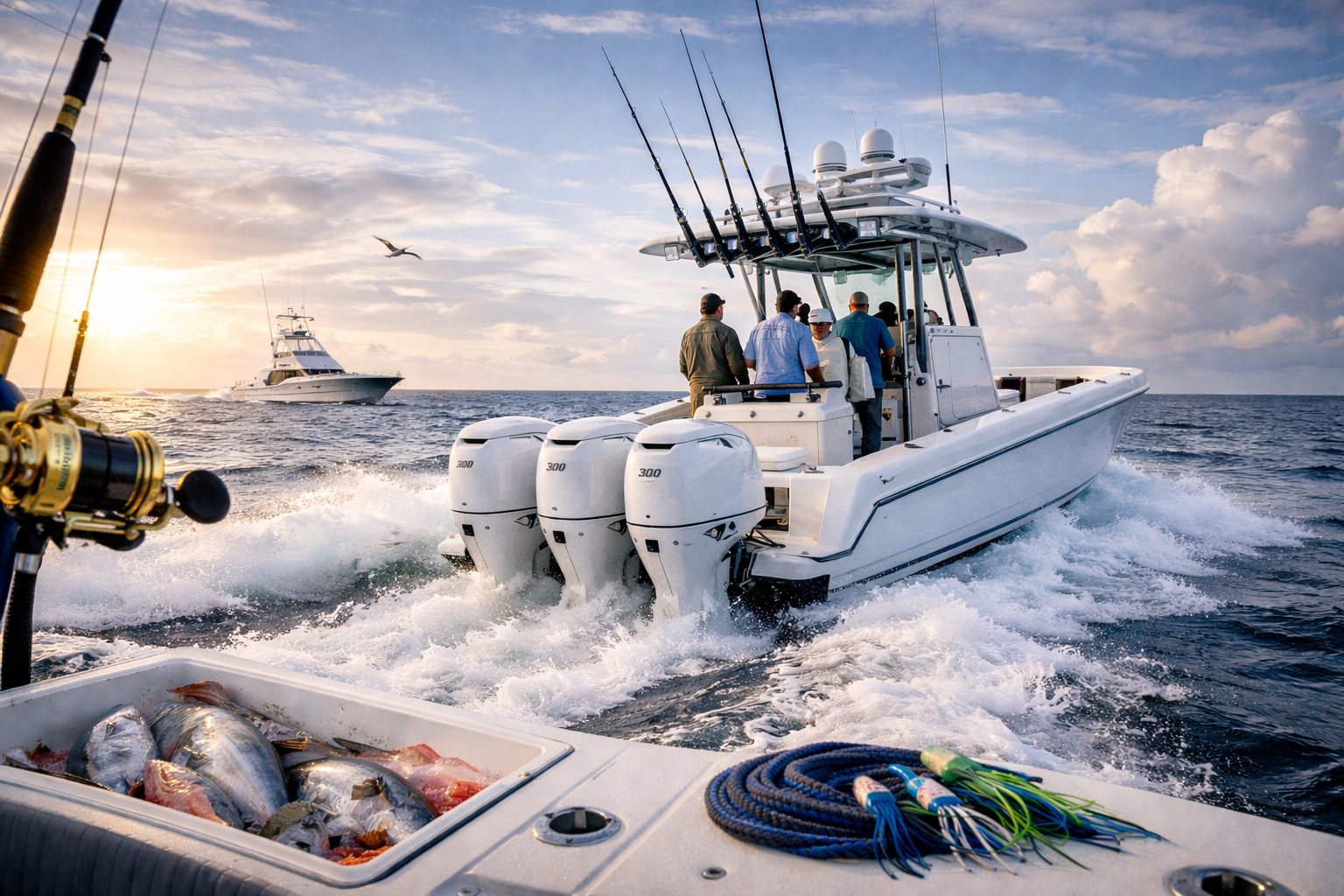
Searching for offshore boats for sale is not the same as shopping for a bay boat or a casual weekend cruiser. Offshore boating demands purpose-built engineering, real-world durability, and a hull that can perform when conditions deteriorate—not just when the water is flat. Whether you’re running 20 miles or 100 miles offshore, the boat you choose directly impacts safety, comfort, fuel efficiency, and your ability to fish effectively.
This guide explains what defines a true offshore boat, the major design differences you’ll see on the market, and why hull style—including catamaran designs like those used by Front Runner Boats has become an increasingly important factor for serious offshore buyers.
What Separates a True Offshore Boat from Everything Else
Many boats are advertised as “offshore capable.” Few are genuinely engineered for offshore conditions.
A true offshore boat is designed to operate consistently in open water where wave intervals are longer, seas are unpredictable, and fatigue becomes a real factor. These boats prioritize:
-
Structural hull integrity
-
Predictable handling in head seas and quartering seas
-
High freeboard and secure cockpit depth
-
Long-range fuel capacity
-
Redundancy in power and critical systems
If a boat feels uncomfortable, unstable, or punishing in moderate offshore chop, it will become dangerous when conditions worsen.
Common Offshore Boat Styles for Sale
Deep-V Monohull Center Consoles
Deep-V center consoles remain the most common offshore boats for sale. They feature a single hull with aggressive deadrise—typically 20–24 degrees at the transom—to cut through waves.
Advantages:
-
Proven offshore performance
-
Predictable handling at speed
-
Excellent head-sea ride when properly designed
Tradeoffs:
-
Roll at rest
-
Higher fuel burn compared to some newer designs
Brands like Yellowfin and Tidewater Boats have refined deep-V hulls that balance ride quality and efficiency for offshore use.
Offshore Catamaran Center Consoles
Catamaran-style offshore boats are gaining serious traction—and for good reason. Unlike traditional monohulls, catamarans use two narrow hulls connected by a tunnel, dramatically changing how the boat interacts with offshore seas.
Front Runner Boats has built its reputation around this design philosophy, focusing on offshore performance, stability, and efficiency rather than legacy hull shapes.
Why Catamaran Offshore Boats Stand Out
Catamaran offshore boats offer several distinct advantages offshore:
-
Exceptional stability at rest – Minimal roll while drifting or slow trolling
-
Flatter running attitude – Less bow rise improves visibility and comfort
-
Reduced pounding – Twin hulls disperse wave energy more efficiently
-
Improved fuel efficiency – Narrow hulls reduce drag
-
Wider usable deck space – More room without increasing length
In real offshore conditions—especially beam seas and sloppy chop—catamarans tend to feel more controlled and less fatiguing over long runs.
Addressing the Myths About Cats Offshore
Early offshore catamarans earned criticism for tunnel slap and unpredictable handling. Modern designs like Front Runner’s have largely solved these issues through refined tunnel geometry, proper weight distribution, and offshore-specific hull shaping.
For buyers who value comfort, stability, and long-range efficiency, catamaran-style offshore boats deserve serious consideration.
Choosing the Right Offshore Boat Size
Size matters offshore—but only when matched correctly to how you use the boat.
24–28 Foot Offshore Boats
-
Nearshore to moderate offshore capability
-
Easier to trailer and store
-
Lower operating costs
-
Best for calm-weather windows
30–35 Foot Offshore Boats
-
Ideal balance for most offshore anglers
-
Better fuel capacity and range
-
Improved ride in mixed conditions
-
Twin to triple outboard setups
36–42+ Foot Offshore Boats
-
Designed for extended offshore runs
-
Triple or quad outboards
-
Heavy-duty systems and construction
-
Higher purchase and operating costs
If you regularly fish 40–80 miles offshore, size becomes less about comfort and more about safety margins.
Hull Construction: Where Offshore Boats Are Won or Lost
Hull design gets attention—but construction quality is what determines longevity offshore.
Look for:
-
Vacuum-infused or hand-laid fiberglass
-
Composite stringer systems (no wood)
-
Closed-cell foam flotation
-
Reinforced transoms and bulkheads
Offshore boats take constant punishment. Poor construction shows up quickly in the form of stress cracks, flexing decks, and long-term structural fatigue.
Power & Redundancy Offshore
Offshore boats should never rely on a single engine.
Twin Outboards (Minimum Standard)
-
Redundancy for safety
-
Balanced weight distribution
-
Easier service access
Triple & Quad Outboards
-
Faster cruise speeds
-
Better performance when heavily loaded
-
Ideal for larger offshore hulls
Reliable outboard brands like Yamaha Marine, and Mercury Marine are all proven offshore—provided the rigging and installation are done correctly.
Offshore Fishing Layout & Features
When evaluating offshore boats for sale, focus on layouts that support real fishing—not just showroom appeal.
Key offshore features include:
-
Large in-deck insulated fish boxes
-
High-capacity livewells with proper circulation
-
Wide, uncluttered cockpit space
-
Abundant rod storage and rocket launchers
-
Heavy-duty cleats and hardware
Catamaran layouts often shine here, offering wider cockpits and more usable space without increasing overall length.
Comfort Is Not Optional Offshore
Long offshore days amplify fatigue. Comfort directly affects safety.
Prioritize:
-
Effective wind protection
-
Secure handholds throughout the boat
-
Non-skid decking
-
Enclosed head options for longer runs
Catamaran offshore boats tend to excel in comfort due to reduced roll and flatter running attitudes, especially when seas build throughout the day.
New vs Used Offshore Boats for Sale
Buying New
Pros:
-
Latest hull designs and electronics
-
Full manufacturer warranties
-
Custom rigging and engine options
Cons:
-
Higher entry cost
-
Immediate depreciation
Buying Used
Pros:
-
Better value per foot
-
Slower depreciation
-
Access to higher-tier brands
Cons:
-
Requires professional survey
-
Maintenance history matters
A well-maintained used offshore boat—especially a premium catamaran or proven deep-V hull—can outperform many new entry-level options.
Why Dealer Expertise Matters Offshore
Offshore boats are complex. Dealer experience matters more here than in almost any other segment.
A knowledgeable offshore dealer provides:
-
Accurate pricing guidance
-
Transparent condition disclosures
-
Survey coordination and sea trials
-
Financing and warranty solutions
-
Post-sale support
This is especially important when buying advanced hull designs like offshore catamarans, where setup and balance are critical.
Offshore Boats for Sale: Market Reality
Demand remains strongest for:
-
30–38 foot offshore center consoles
-
Clean, turn-key boats
-
Proven offshore hulls
-
Efficient multi-engine setups
Catamaran-style offshore boats continue gaining market share as more buyers prioritize ride comfort, stability, and fuel efficiency over tradition.
Final Takeaway
When searching for offshore boats for sale, the decision should be driven by engineering—not marketing hype. Hull design, construction quality, power redundancy, and dealer expertise matter far more than graphics or gadgetry.
Deep-V monohulls remain excellent offshore platforms. However, modern offshore catamarans—particularly those from builders like Front Runner Boats—offer compelling advantages in stability, efficiency, and comfort that are reshaping buyer expectations.
Choose the boat that matches how and where you fish, not just what looks good at the dock. Offshore rewards preparation—and the right boat makes all the difference.